
Blog / CNC & Manufacturing
Modern Woodworking Technology:
How Modern Woodworking Technology Is Transforming Joinery
May 21, 2026
Modern woodworking technology is rapidly changing the joinery and manufacturing industries. From AI-powered machinery and advanced dust extraction systems to CNC automation and digital fabrication tools, workshops today are becoming safer, cleaner, and more efficient than ever before.
What was once a highly manual trade is now evolving into a smarter, technology-driven industry where automation, artificial intelligence, and precision manufacturing work together to improve productivity and safety without removing the craftsmanship that defines woodworking.
As construction and manufacturing industries continue embracing digital transformation, joinery businesses that adopt modern technologies are positioning themselves for stronger efficiency, improved project delivery, and long-term growth.
Why Modern Woodworking Technology Matters
One of the biggest changes modern woodworking technology has introduced is the improvement of workshop safety, air quality, and operational efficiency.
Traditional woodworking workshops were often filled with airborne dust particles that created long-term health risks for workers. Today, advanced dust extraction systems, industrial air filtration technologies, and smart dust management solutions are helping workshops become significantly cleaner and safer.
Modern smart extraction systems can automatically activate only when machinery is operating, reducing unnecessary energy usage while maintaining cleaner production environments.
For joinery manufacturers and cabinetry workshops, these improvements provide several benefits:
Improved worker safety
Reduced airborne dust exposure
Better equipment maintenance
Cleaner workshop environments
Lower operational costs
Improved workflow efficiency
As workplace safety standards continue evolving, investing in modern woodworking technology is becoming increasingly important across the joinery and manufacturing sectors.
AI-Powered Safety Systems in Modern Woodworking Technology
Artificial intelligence is also making woodworking machinery significantly safer.
Modern table saws and cutting equipment now use intelligent safety systems capable of detecting when hands move dangerously close to blades. Some systems use electrical signal detection, while others rely on AI-powered cameras and sensors that monitor operator movements in real time.
When danger is detected, the machine can stop the blade almost instantly, helping prevent severe injuries.
Smarter Machine Protection
AI-assisted safety systems provide several advantages:
Faster emergency response times
Reduced workplace injuries
Improved operator confidence
Lower downtime caused by accidents
Enhanced compliance with safety regulations
These advancements show how modern woodworking technology is supporting tradespeople rather than replacing them.
For workshops using panel saws, CNC routers, and automated cutting systems, intelligent safety features are becoming essential investments for both productivity and worker protection.
The Growing Role of CNC Technology in Joinery Manufacturing
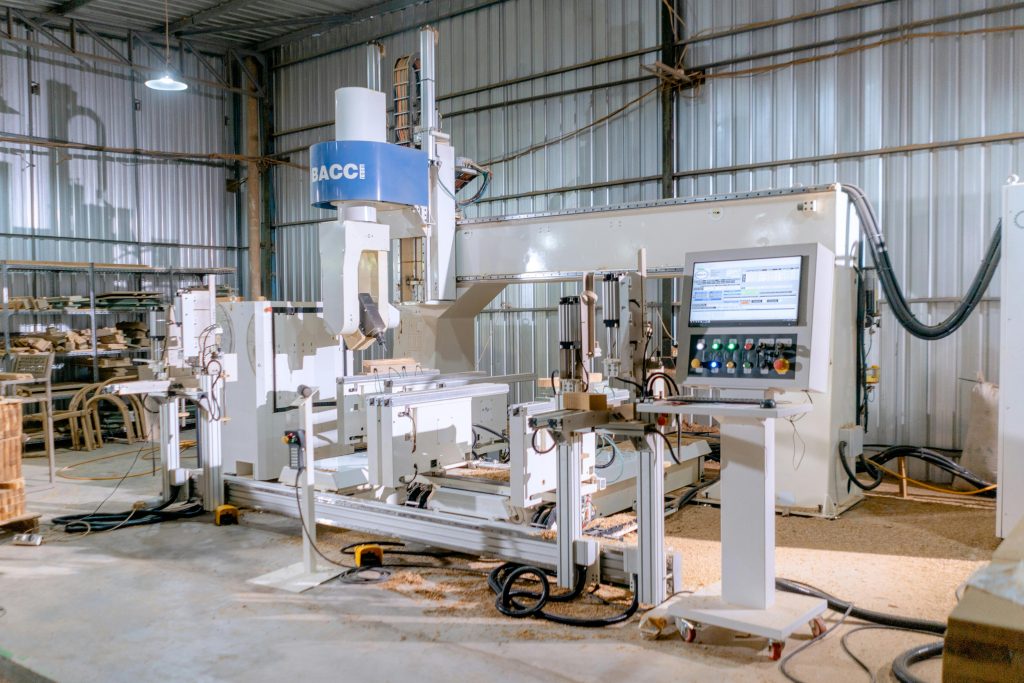
Computer Numerical Control (CNC) technology continues to play a major role in modern joinery manufacturing.
Although CNC machinery has existed for decades, newer software developments have made these systems more accessible, easier to operate, and more efficient than ever before. Features such as automatic tool changing, digital design integration, and simplified interfaces are helping more businesses adopt CNC manufacturing workflows.
Improved Accuracy and Production Efficiency
CNC routers and automated cutting systems help joinery businesses achieve:
- Greater cutting precision
- Faster production times
- Improved consistency
- Streamlined manufacturing workflows
- Reduced material waste
The integration between CAD software, CNC programming, and production machinery allows designers and manufacturers to move from concept to fabrication with greater speed and accuracy.
This is especially valuable for commercial fit-outs, custom cabinetry, and large-scale manufacturing projects where precision and efficiency are critical.
Automation Is Reaching Construction Sites
Automation is no longer limited to manufacturing facilities. Modern woodworking technology is now influencing how timber structures and prefabricated components are produced directly on construction sites.
Portable robotic manufacturing systems and mobile microfactories are allowing timber wall panels and structural components to be fabricated on-site using automated workflows.
This approach offers several advantages:
- Faster project completion
- Reduced transportation costs
- Improved material efficiency
- Streamlined prefabrication processes
- Greater production flexibility
As off-site manufacturing and prefabrication continue to grow within the construction industry, automation is expected to become a larger part of modern building methods.
Digital Fabrication and Smart Design Tools
Modern woodworking technology is expanding beyond traditional machinery through the use of digital fabrication tools such as laser cutters, handheld CNC routers, and 3D printers.
Some woodworking businesses now use 3D printing to create custom jigs, templates, and specialised production tools that improve workflow accuracy and efficiency.
At the same time, digital scanning systems and smart design platforms are simplifying measuring, designing, and production planning before fabrication even begins.
AI in Design and Material Planning
Artificial intelligence is increasingly integrated into woodworking software to assist with:
Material optimization
Layout planning
Design generation
Workflow management
Production scheduling
AI-powered systems help reduce waste, improve productivity, and support better project coordination throughout the manufacturing process.
For joinery businesses managing multiple projects simultaneously, these digital tools can significantly improve operational efficiency while maintaining high-quality production standards.
Balancing Modern Technology with Traditional Craftsmanship
Despite rapid advancements in AI and automation, craftsmanship remains at the heart of woodworking and joinery.
Many professionals still value the hands-on experience, creative problem-solving, and practical skills that traditional woodworking requires. While digital tools improve precision and efficiency, experienced tradespeople continue to play a vital role in ensuring quality outcomes.
Modern woodworking technology works best when combined with human expertise rather than replacing it entirely.
Successful joinery businesses are increasingly blending traditional craftsmanship with smart manufacturing solutions to deliver better project outcomes, higher efficiency, and improved client satisfaction.
The Future of Modern Woodworking Technology
Modern woodworking technology is reshaping the future of joinery by combining craftsmanship with automation, AI, and smart manufacturing systems.
Future workshops are likely to continue adopting:
- AI-powered safety monitoring
- Smart dust extraction systems
- Automated CNC workflows
- Digital production planning
- Robotics and microfactories
- Advanced material optimization software
As these technologies become more accessible, joinery businesses of all sizes can benefit from improved productivity, safety, and manufacturing quality.
Companies that successfully integrate advanced technology while preserving craftsmanship and practical expertise will be better positioned for the future of the woodworking and joinery industries.
In This Article
- Why Modern Woodworking Technology Matters
- AI-Powered Safety Systems in Modern Woodworking Technology
- The Growing Role of CNC Technology in Joinery Manufacturing
- Digital Fabrication and Smart Design Tools
- Automation Is Reaching Construction Sites
- Balancing Modern Technology with Traditional Craftsmanship
- The Future of Modern Woodworking Technology
Precision joinery drafting and design development for manufacturers, designers, and builders Australia-wide.
- info@inlineconsulting.au
- Melbourne, Victoria Australia
- +61 419 391 712
- InLine Consulting Australia